
SYNCHROKNOT <<^>>
CORE ARCHITECTURE AND PRODUCT MATRIXA New Genre in Decentralized, Software-ASIC-Based Stateless SD-WAN Product Lines, Decentralized Cloud Orchestrators, Liquid Super & Ultra Processors, and Superconducting Databases.
Synchroknot completely bypasses the vulnerable control-plane overlays and brittle software abstractions of legacy networking vendors like Cisco, VMware, Juniper, Fortinet, and Palo Alto Networks. By eliminating bloated centralized controller daemons, proprietary license locks, and unstable middlebox appliances, the Synchroknot engine binds an immutable, protocol-agnostic stateless cloud fabric directly to your bare-metal kernel.
Four definitive architectural product lines:
• SYNCHROKNOT QUANTUM DATA DECENTER FABRIC: Converts standard AMD64 servers into high-performance Software ASICs executing advanced cryptographic matrix streams directly inside CPU ALU registers across 14 independent, isolated Stateless SD-WAN Engine variants.
• SYNCHROKNOT CLOUD DEORCHESTRATOR: A zero-state management plane engineered as the definitive absolute alternative to VMware vSphere, OpenStack clusters, and Kubernetes control planes.
• SYNCHROKNOT LIQUID SUPER & ULTRA PROCESSORS: Transforms standard GPUs into VPUs (Velocity Processing Unit) executing the entire Conditional Probability Field simultaneously via Hardware Path Predication and Intelligent Branch Flattening to run all AMD64 [x86_64] applications “as is” with zero recompilation, while achieving complete hardware eradication via an in-process, lockless double-buffered register bank that bypasses OS context scheduling entirely.
• SYNCHROKNOT SUPERCONDUCTING DATABASE: Permanently breaks single-box scalability barriers by collapsing multi-node relational workloads into synchronized, 32-byte aligned VRAM matrix strides that absorb and parallelize raw Oracle RAC and MySQL queries at raw line speed with zero application modification.
Research Pipeline Expansion // The ecosystem additionally extends its deterministic core framework into global mobility vectors via the Synchroknot Interplanetary Light Electric—a pure space-age, reverse-trike SUV platform built to bypass legacy international certifications.
Invariance [Noun // In·var·i·ance]: The mathematical guarantee of absolute constancy under external change. In the Synchroknot architecture, this eliminates two critical industry failure vectors:
(1) Transit Invariance: Payloads traverse local LAN fiber, cellular backhauls, and orbital satellite arrays with zero payload mutation, zero MTU fragmentation, and zero encapsulation overhead.
(2) Scaling Invariance: Operating at true flat 𝒪(1) algorithmic complexity, the resource footprint on the bare-metal kernel remains completely unchanged whether routing data across two endpoints or scaling dynamically to a very large global cluster of nodes.
01 // SYNCHROKNOT QUANTUM DATA DECENTER FABRIC
[ PURE L2 WILDCARD MULTIPOINT POST-QUANTUM INVARIANCE ]Delivering encrypted, non-interactive Layer 2 post-quantum transit invariance across wired fiber terrestrial links, high-mobility wireless backhauls, and orbital satellite arrays with absolute zero transport-layer awareness. No heavy infrastructure footprint. No cross-cluster controller drift. No key-exchange handshakes — bypasses near-term quantum decryption vectors completely. Absolute architectural dominance.
By converting the regular AMD64 servers into Software ASICs, moving cryptography entirely into CPU ALU Registers and path routing into stateless kernel space, the Stateless SD-WAN Fabric operates with total transparency across pure IPv4, pure IPv6, or mixed enterprise Dual-Stack topologies. Endpoints dynamically self-heal and auto-select the best available physical path on-the-fly, allowing infrastructure teams to drop or inject physical underlay links with zero downtime.
The core engine natively flattens multi-region data center interconnects (DCI) into a single multipoint wildcard domain. It forces broadcast isolation while preserving true packet invariance, meaning your data payloads traverse complex terrestrial and orbital lines without experiencing MTU fragmentation, payload encapsulation penalties, or packet-inspecting middleware delays.
ALGORITHMIC MATHEMATICAL SCALING INVARIANCE: 𝒪(1) VS 𝒪(N²)
Legacy SD-WAN and mesh architectures scale on an exponential degradation curve of 𝒪(N²). As endpoints (N) increase, background link-state gossiping, dynamic updates, and routing table syncs expand quadratically—flooding tunnels with protocol noise and crashing central orchestrators. Synchroknot operates at pure, flat 𝒪(1) algorithmic complexity. Because cryptographic paths are derived locally from independent mathematical seeds, adding endpoint number 20,000,001 places absolute zero communication overhead on the existing 20 million peers. Background chatter is completely zeroed, delivering structural scaling immunity.
02 // SYNCHROKNOT CLOUD DEORCHESTRATOR
[ THE DEFINITIVE ALL-IN-ONE BARE-METAL UNIFIED SERVER, SWITCH, ROUTER & STORAGE ]The Synchroknot Cloud Deorchestrator software provides a complete, shared-nothing hyperconverged platform designed as the definitive absolute alternative to VMware vSphere, OpenStack clusters, Kubernetes, legacy distributed storage silos, and centralized hardware routing arrays. By embedding a decentralized bare-metal virtualization engine natively alongside local kernel resources, Synchroknot transforms independent commodity hardware into a unified, all-in-one execution node—completely eliminating multi-vendor infrastructure bloat and heavy enterprise licensing traps.
Every individual node functions as an independent high-performance engine, computing line-rate, shared-nothing data paths natively. Compute instances scale dynamically via non-interactive endpoint provisioning, while our optimized platform compiler handles virtual machine allocation, time-travel snapshots, high-speed multi-tenant decentralized search operations, automatic live migrations, and block-level differential storage replication at raw hardware speed with zero infrastructure drift or central metadata dependencies.
Completely abstracted from user-space application contexts, the platform decouples network execution across 14 independent, isolated Cryptographic SD-WAN Engine variants. The fabric provisions up to 10²¹ mathematically isolated cryptographic stateless paths across a single local Data Center LAN or stretched across global WAN boundaries—establishing zero-chatter security boundaries with zero background sync chatter or routing updates on the wire.
03 // SYNCHROKNOT LIQUID SUPER-PROCESSOR
[ THE END OF THE SISD ERA – RECLAIMING THE DARK SILICON ]Research Pipeline: SYNCHROKNOT LIQUID SUPER-PROCESSOR transforms a GPU into a VPU – Velocity Processing Unit capable of running all AMD64 [x86_64] instructions and applications AS IS inside the VPU transparently without having to recompile or re-code.
The industry has spent four decades refining a fundamental architectural error, protected by a regulatory and institutional inertia that has stifled real innovation. The SISD (Single Instruction, Single Data) architecture was designed for an era of transistor scarcity; yet in 2026, it remains the standard, resulting in a Systemic Resource Drain that has cost the global economy forty years of potential growth.
Today, 80% of global silicon remains “Dark”—consumed by the Stochastic Penalty of branch speculation. Legacy-tier architectures (Intel/ARM/AMD) are crippled by this reliance on probability. In the SYNCHROKNOT Liquid Super-Processor VPU Design, Architecture and Topology, we have transitioned to High-Fidelity Path Predication and Intelligent Branch Flattening. Instead of attempting to predict a single logical outcome, the substrate executes the entire Conditional Probability Field simultaneously. This ensures that the valid logic state is selected appropriately and thus rendering the speculative guessing of the legacy era an obsolete artifact.
SYNCHROKNOT LIQUID SUPER-PROCESSOR: HOW IT REPLACES STANDARD SILICON
Traditional x86_64 (Intel Xeon, AMD EPYC) and ARM processors are built on a rigid scalar pipeline architecture. They depend heavily on massive, power-hungry control units designed to predict the future. To maintain speed, they use hardware branch predictors, out-of-order execution schedulers, and deep instruction decode pipelines. When code branches or loops, the CPU guesses the path. If it guesses incorrectly, the entire pipeline is flushed, wasting clock cycles and generating massive thermal overhead.
The SYNCHROKNOT Liquid Super-Processor replaces this hardware-managed guessing game with a Software-Defined Symmetrical Math Fabric. It changes your infrastructure’s relationship with raw machine code:
* From Logical to Mathematical: Instead of executing code as a series of sequential branch choices, it transforms instructions into fluid, multi-dimensional matrix transformations and thus called the Liquid Super-Processor.
* Silicon Independence: It demotes the host AMD64/ARM CPU to a basic, insignificant linear instruction pump. The host processor no longer handles control flow logic or nested loops.
03B // SYNCHROKNOT LIQUID ULTRA-PROCESSOR
✦ [ COMPLETE HARDWARE ERADICATION – BEYOND YOTTA-SCALE EXPONENTIAL CONTINUUM ] ✦The SYNCHROKNOT Liquid Ultra-Processor transitions architecture from simple CPU demotion to COMPLETE HARDWARE ERADICATION. By executing an in-process, lockless double-buffered register bank that bypasses OS context scheduling, the host CPU is eliminated entirely from the execution path.
It provides dual-ecosystem execution capabilities supporting both proprietary NVIDIA subsystems and universal OpenCL arrays for cross-platform hardware sovereignty and exponential vector performance acceleration.
The SYNCHROKNOT Liquid Ultra-Processor stands alone as the SOLE, Beyond Yotta-Scale Continuous Continuum AMD64 Processor Engine in existence—collapsing legacy Von Neumann processing bottlenecks into fluid, unrolled mathematical space natively within accelerated vector arrays.
THE DUAL-ECOSYSTEM COMPUTE REVELATION
The completed architecture operates with total cross-platform hardware sovereignty, delivering identical branchless execution velocities across two specialized deployment profiles:
* Profile A (Proprietary NVIDIA Subsystem): Bypasses high-level runtime environments, interacting directly with low-level NVIDIA Driver APIs for zero-copy device mappings and unrolled execution grids dispatched natively to physical warp cores.
* Profile B (Universal OpenCL Subsystem): Abstracts the network and hardware boundary completely. Implements cross-vendor context structures and command queues to execute fluid mathematical instructions interchangeably across NVIDIA, AMD, and Intel accelerator arrays simultaneously.
⚡ STRATEGIC EXPONENTIAL CAPITAL VELOCITY ADVANTAGE ⚡
Structuring the technology transfer as a non-exclusive architectural specification bypasses traditional infrastructure M&A integration friction, aligning public balance sheets with accelerated, exponential capital asset velocity and compounding market momentum.
[ PROPRIETARY INTELLECTUAL PROPERTY SOVEREIGNTY DECLARATION ]Intellectual Property Asset Matrix Ownership: All foundational computing paradigms, cryptographic protocols, architectural blueprints, and source code bases presented are the Exclusive Personal Intellectual Property of Mehul Sharma. The associated corporate entity acts strictly as a stateless operational deployment and exponential transfer vehicle retaining zero independent equity or asset rights.
05 // SYNCHROKNOT SUPERCONDUCTING DATABASE
✦ [ TRANS-CLUSTER PROTOCOL ABSORPTION – BEYOND MULTI-TENANT RELATIONAL INVARIANCE ] ✦The SYNCHROKNOT Superconducting Database permanently breaks the single-box scalability limits of legacy relational models. By collapsing multi-node relational queries into synchronized, 32-byte aligned VRAM matrix strides that bypass standard OS storage overhead, the platform absorbs and parallelizes raw Oracle RAC and MySQL workloads as-is with zero application modification.
It opens high-velocity wire-protocol proxy daemons natively on standard enterprise storage interfaces, intercepting connection sequences at raw line speed to execute unrolled, lockless data-plane sweeps across a decentralized cluster fabric.
The SYNCHROKNOT Superconducting DB functions as the world’s sole deterministic multi-dialect execution substrate—collapsing the stateful index contention traps of InnoDB and Oracle RAC architectures into flat-time mathematical space running directly on hardware vector arrays.
THE DUAL-ENGINE WIRE INTERCEPT ARCHITECTURE
The deployed architecture operates with complete cross-engine transparency, delivering single-digit microsecond point-lookups across two specialized enterprise integration vectors:
* Vector A (Transparent Legacy Data Ingestion): Bypasses high-level hypervisor and file system layers to map raw storage blocks via direct Peer-to-Peer DMA. Intercepts incoming network traffic on native database interface targets (MySQL Port 3306 / Oracle Port 1521), instantly translating SQL text commands into parallel hardware array parameters.
* Vector B (Native Zero-Dependency Matrix Fabric): Reconstructs relational queries into persistent, unrolled stride evaluation loops mimicking parallel GPU warp mechanics. Utilizes strict double-validation integrity masks to evaluate data fields concurrently across multi-node satellite networks without host CPU context switching.
⚡ EXPONENTIAL N+2 MESH REDUNDANCY IMMUNITY ⚡
Decoupling relational storage into an over-the-top concurrent mirror network eliminates traditional single-point failure vectors. If an active cluster node falls offline, the surviving memory substrate automatically executes a parallel matrix inversion sweep, rebuilding missing data shards in-flight via hardware-accelerated XOR parity matrices at full wire speed.
[ PROPRIETARY INTELLECTUAL PROPERTY SOVEREIGNTY DECLARATION ]Intellectual Property Asset Matrix Ownership: All foundational computing paradigms, cryptographic protocols, architectural blueprints, and source code bases presented are the Exclusive Personal Intellectual Property of Mehul Sharma. The associated corporate entity acts strictly as a stateless operational deployment and exponential transfer vehicle retaining zero independent equity or asset rights.
| Architectural Domain | Technical Feature Parameter Profile | System Performance & Invariance Metric |
|---|---|---|
| Wire-Protocol Proxy Layer | Dual-Port Multi-Dialect Masquerading | Hosts persistent native listener daemons concurrently on MySQL Port 3306 and Oracle TNS Port 1521 out of a single process footprint. |
| Packet Intercept Mechanics | Deterministic Machine State Scanner | Bypasses volatile, context-destructive C library string utilities entirely; uses pure linear byte-by-byte ASCII token isolation. |
| Hexadecimal Normalization | Automated Base Selection Engine | Automatically normalizes mixed-case text variations and uppercase hexadecimal characters natively without string mutation. |
| Storage Fabric Design | Flat-Linear Continuous RAM Matrix | Collapses fragmented database shard memory maps into a single, linearly stacked array layout to prevent dynamic cache line evictions. |
| Hardware Alignment | Strict 32-Byte Boundary Packing | Binds active structural database rows exclusively onto physical cache lines to eliminate data bus stride misalignments. |
| Concurrency Controls | Lockless Memory Fencing | Secures thread state separation between daemons and bulk loaders via __atomic_load_n, __atomic_store_n, and __builtin_ia32_mfence. |
| Memory Isolation | Dynamic Heap Buffer Allocation | Processes data streams entirely inside isolated heap segments (malloc/calloc) to secure thread safety across millions of rows. |
| Cluster Redundancy | Exponential N+2 Mesh Immunity | Automatically triggers parallel matrix inversion sweeps to rebuild missing data shards in-flight via hardware-accelerated XOR parity matrices. |
| Data Ingestion Velocity | Transparent Peer-to-Peer DMA | Bypasses standard operating system hypervisors and storage stack overhead to ingest raw legacy database dumps at full wire speed. |
04 // SYNCHROKNOT INTERPLANETARY LIGHT ELECTRIC
[ SPACE-AGE REVERSE-TRIKE SUV PLATFORM ]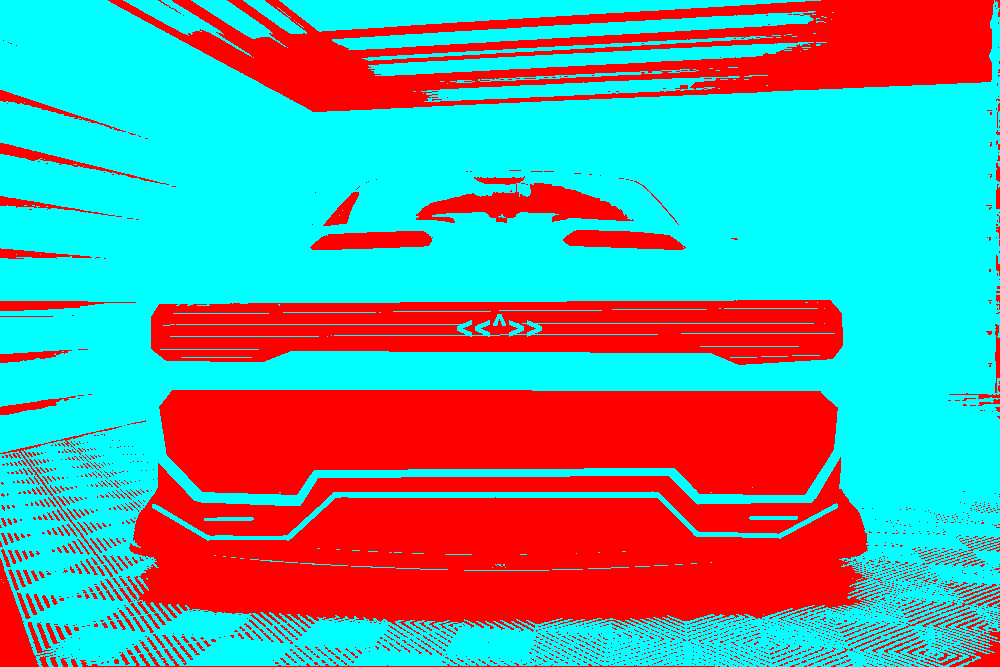
Research Pipeline: Built to redefine global mobility, the Synchroknot Interplanetary Light Electric stands as a completely blank-canvas achievement in space-age transportation. Engineered ground-up with a unique off-road chassis and structural safety cage, it operates as a full-size, all-electric multi-terrain SUV with a highly extended driving range.
By structurally optimizing the drivetrain into a pure reverse-trike architecture wrapped around heavy-duty 33-inch tires, this ultra-premium platform establishes total legal and regulatory bypass. Owners can drive it through most global jurisdictions with zero complex automotive certification—simply register it at your local transport hub for an immediate license plate.
Features an advanced, high-performance custom electric motor synchronized via a persistent Adaptive Torque. The algorithmic design and architecture of the motor enables automatic, pre-configured wheel-RPM to motor-RPM alignments, distributing continuous variable torque directly across changing track terrains to lock down high-stability tracking at raw speed.
Capital Arbitrage & Acquisition: Supported by dedicated financial engineering protocols, our long-term acquisition framework eliminates classic multi-vendor dealership inflation practices, systematically optimizing production capital to structure a programmatic purchase profile where operators can acquire two vehicles for the price of one.
While legacy secure transit frameworks rely on continuous, interactive asymmetric handshakes every few minutes to renegotiate session states, the Synchroknot Symmetric Deterministic Core (SDC) permanently restructures the kernel state machine completely and bypasses over-the-wire negotiation loops and eliminates keepalive traffic dropping network noise to a flat 0 Bps during idle states. Depending on the product type, there are ZERO-KEY-EXCHANGES, ZERO-HANDSHAKES and ZERO-NEGOTIATIONS — 100% STATELESS and DECENTRALIZED END-TO-END. Encrypts payload in-place with 0 Bytes (Zero-Header Bloat).
▶ Engineering Blueprint // Symmetric Deterministic Core Mechanics
Highly resilient multi-path routing matrix executing directly at the driver layer. Performs fully automatic path failover, sub-millisecond failback, and dynamic underlay load balancing with total transparency across dual-stack links.
Continuous Maximum Transmission Unit calculation executing at the lowest kernel layer. Automatically forces optimal, fragmentation-free MTU boundaries on-the-fly across wired fiber, wireless backhauls, and satellite loops.
Automated, real-time horizontal expansion and contraction of the decentralized stateless mesh. Global endpoints scale into the fabric dynamically without introducing configuration drift or traffic interruptions to existing data flows.
▶ Engineering Blueprint // Broadcast Suppression & Discovery Mechanics
Delivers deep multi-tenant path virtualization at sub-microsecond scale. Merges Carrier Bridging standards with nested encapsulations, combining 802.1AD (QinQ) with 6 deep stacks of 802.1Q tagging inside a single wildcard domain providing up to 10²¹ isolated paths.
▶ Engineering Blueprint // Multi-Stack Carrier Virtualization Mechanics
Local endpoints autonomously intercept and reply to ARP queries and dynamically translate NDP (Neighbor Discovery Protocol) Broadcast requests to Unicast locally inside the kernel space. Reduces-to-Eliminates broadcasts and completely stops broadcast storm propagation.
SYNCHROKNOT QUANTUM DATA DECENTER PRODUCT LINES
Engineered with unique proprietary Two’s Complement Modular Arithmetic to enforce hardware-grade Anti-Replay Windowing and Forward-Leap Verification Loops directly inside the data plane. By binding security sequences mathematically to native layer boundaries, the SYNCHROKNOT QUANTUM DATA DECENTER FABRIC provides 100% deterministic packet validation with Zero Structural Header Bloat or MTU performance penalty.
The results of the Fast-Path Latency detailed below were captured natively within the CPU ALU Register of a single, ordinary commodity x86 processor (AMD Ryzen 7) routing directly between isolated network namespaces. To establish a true worst-case baseline, this payload was subjected to a continuous Double-Encryption and Double-Decryption loop on a single silicon die. Traditional architectures—including Cisco, Juniper, VMware NSX, or standard Open vSwitch configurations—rely on heavy, distributed server hardware to mask the inherent inefficiency of VXLAN encapsulation and complex cryptographic layering (like IPsec or standard AES-GCM). When denied this multi-chassis hardware assistance and collapsed onto a single x86 chip under identical multi-namespace conditions, legacy software stacks suffer devastating latency degradation.
Stripped of specialized hardware offload cards, the compounding overhead of continuous CPU context switching, aggressive memory buffer allocation, and cross-core interrupt signaling drives standard legacy round-trip times past a staggering 1.500 ms to 3.000 ms (1,500 to 3,000 microseconds). This represents an unalterable architectural truth: because this test utilizes standard Linux networking primitives, any engineer can deploy an IPsec/VXLAN tunnel across two namespaces on a single host to independently replicate and verify these identical legacy latency drops. Extensive real-world benchmarks prove that while legacy frameworks thrash the system memory bus to maintain deep stateful queues, the SYNCHROKNOT fabric executes its mathematical data-plane validation inline, completely bypassing the memory bus to maintain deterministic, single-digit microsecond efficiency on the exact same commodity silicon.
TIER 1 // DECENTRALIZED CRYPTOGRAPHIC FABRIC (ULTRA-PREMIUM)
SYNCHROKNOT AEGIS-128 ENGINE
PRODUCT LINE 1Cryptographic Engine: Native AEGIS-128 Stream Cipher / Authenticated Encryption (RFC 9452 / RFC 9453 Standard Compliance).
Software ASIC Register Architecture: 5-Word 64-Bit State Matrix Permutation inside general ALU registers.
Specification: AEGIS-128 Authenticated Encryption Standard.
Round Configuration: 5 Independent 128-bit State Register Loop Passes.
Fast-Path Latency: 0.049 ms – 0.221 ms [CACHE HIT PROFILE: ULTRA-STABLE].
Deployment Profile: Strategic multi-gigabit trunk backbones and Tier 3 Directors.
SYNCHROKNOT ASCON-128 ENGINE
PRODUCT LINE 2Cryptographic Engine: Lightweight ASCON-128 Permutation Engine (NIST LWC Standard / RFC 9653 / ISO/IEC 29192-5 Verified).
Software ASIC Register Architecture: Bit-Sliced 320-Bit State via 64-Bit Native Instruction Chains (ror).
Specification: NIST LWC Finalist (ASCON-128 / ISO/IEC 29192-5).
Round Configuration: 6-Round Permutation Engine Layer (pb Intermediate Pass).
Fast-Path Latency: 0.047 ms – 0.232 ms [PEAK ALU PIPELINING SPEED].
Deployment Profile: Ultra-low latency edge sentries and highly resource-bound lines.
SYNCHROKNOT ASCON-HASH ENGINE
(THE FUTURISTIC INTEGRITY WEAPON)
PRODUCT LINE 3
Cryptographic Engine: Native IETF Ascon-Hash Core (RFC 9653 Standard – Released Sept 2024).
Software ASIC Register Architecture: 320-Bit Permutation State Block optimized for Attestation Hashing.
Specification: NIST LWC Standard ASCON-HASH.
Round Configuration: 12 Unrolled Initialization Permutation Rounds (pa S-Box Pass).
Fast-Path Latency: 0.047 ms – 0.116 ms [ZERO INTER-CORE BLOCKING].
Deployment Profile: Tamper-proof session binding, line-rate packet integrity validation.
SYNCHROKNOT ML-KEM / KYBER-1024
(THE BEYOND POST-QUANTUM SHIELD)
PRODUCT LINE 13
Cryptographic Engine: FIPS 203 Post-Quantum Key Encapsulation (NIST Cat 5) / IETF RFC 9998 & IETF LAMPS Protocol Mapping Compliant.
Software ASIC Register Architecture: High-Dimensional Polynomial Ring Operators with Barrett Reduction Matrix Diffusion.
Specification: NIST FIPS 203 (Post-Quantum Post-Lattice Matrix).
Round Configuration: Modular Barrett Reduction Ring Arithmetic (q = 3329, n = 256).
Fast-Path Latency: 0.050 ms – 0.233 ms [M-LWE LATTICE ALGEBRA CORES].
Deployment Profile: Future-proof tactical mesh infrastructures and quantum-resistant backbone nodes.
SYNCHROKNOT CHACHA20 ENGINE
PRODUCT LINE 4Cryptographic Engine: Standard-Compliant ChaCha20 Engine (RFC 7539 Standard).
Software ASIC Register Architecture: Full 20-Round Dual-Cycle Matrix Permutation inside 32-Bit Slots.
Specification: RFC 8439.
Round Configuration: 20 Total Processing Rounds (10 Unrolled Column/Diagonal Dual-Rounds).
Fast-Path Latency: 0.049 ms – 0.215 ms [COMPLIANT PIPELINE MATRIX].
Deployment Profile: Multi-tenant networks, enterprise clouds, and regional data hubs.
SYNCHROKNOT CHACHA12 ENGINE
PRODUCT LINE 5Cryptographic Engine: Pipeline-Optimized 12-Round XChaCha Variant (RFC 8439 Core Framework / IETF CFRG Extensions Tracker).
Software ASIC Register Architecture: 6 Dual-Round ARX Cycles Unrolled to Direct Register Assembly.
Specification: ChaCha-12 Stream Cipher Architecture.
Round Configuration: 12 ARX Pipeline Transformations (6 Coupled Dual-Round Passes).
Fast-Path Latency: 0.047 ms – 0.225 ms [LOW CLOCK-CYCLE PENALTY BLOCKS].
Deployment Profile: High-density distributed branches and high-throughput fabric links.
SYNCHROKNOT SPARKLE-256 ENGINE
(THE DECENTRALIZED EDGE CHAMPION)
PRODUCT LINE 6
Cryptographic Engine: NIST LWC Standard Sparkle Permutation Engine (Schwaemm AEAD Core Specification).
Software ASIC Register Architecture: Pure Bitwise ARX Primitives (Alzette Rounds) with zero S-Box lookups.
Specification: NIST LWC Finalist SPARKLE-256.
Round Configuration: 10 Unrolled Alzette ARX Transformation Steps.
Fast-Path Latency: 0.049 ms – 0.222 ms [ULTRA-LOW THERMAL PROFILE AT SCALE].
Deployment Profile: Ultra-dense IoT mesh lines, edge micro-appliances, and satellite arrays.
SYNCHROKNOT CAMELLIA-256 ENGINE
(SOVEREIGN FREQUENCY ARCHITECTURE)
PRODUCT LINE 10
Cryptographic Engine: Sovereign Core Block Cipher Engine (RFC 3713 / RFC 4312 Specifications).
Software ASIC Register Architecture: Substitution-Permutation Network (SPN) with Dual FL/FL⁻¹ Non-Linear Function Layers.
Specification: RFC 3713 / ISO/IEC 18033-3.
Round Configuration: 24 Complete Feistel Rounds with Interleaved FL/FLINV Subkey Layers.
Fast-Path Latency: 0.049 ms – 0.228 ms [HIGH ALGEBRAIC COMPLEXITY CORES].
Deployment Profile: High-security government trunks, compliance-restricted routes, and financial zones.
SYNCHROKNOT SALSA20-CORE ENGINE
PRODUCT LINE 12Cryptographic Engine: High-Performance Symmetric Stream Primitive (RFC 8439 Core Spec).
Software ASIC Register Architecture: 512-Bit Matrix Block Expansion utilizing unrolled Column/Row Quarter rounds.
Specification: Salsa20 Core Architecture Standard – RFC 8439.
Round Configuration: 20 Mandatory Quarter-Round Matrix Transformations.
Fast-Path Latency: 0.051 ms – 0.239 ms [MAXIMUM BITWISE TRANSPOSITION FLOW].
Deployment Profile: High-velocity media streams, real-time distributed routing matrices, and data planes.
SYNCHROKNOT AES-CTR ENGINE
PRODUCT LINE 7Cryptographic Engine: Custom Register-Bound Substitution-Diffusion Counter Model.
Software ASIC Register Architecture: Multi-Stage Bitwise Confusion Loops matching Native Integer Bounds.
Specification: NIST FIPS 197 / SP 800-38A.
Round Configuration: 14 Mandatory Unrolled Transformations (SubBytes, ShiftRows, MixColumns).
Fast-Path Latency: 0.050 ms – 0.225 ms [BOUND-SAFE DEBIAN VERIFIER TUNED].
Deployment Profile: Carrier-grade internal underlays, loopback links, and local rings.
SYNCHROKNOT RABBIT ENGINE
PRODUCT LINE 8Cryptographic Engine: Native Rabbit Stream Cipher Architecture (RFC 4503 Standard).
Software ASIC Register Architecture: 32-Bit Direct Addition/Rotation/XOR with Constant Carry Injections.
Specification: RFC 4503.
Round Configuration: Full Internal Multi-Word Stream Mixer (Nested Non-Linear g-function Squares).
Fast-Path Latency: 0.050 ms – 0.221 ms [FASTEST COMPILATION REGISTER TUNING].
Deployment Profile: Isolated secure tunnels and high-performance local mesh lines.
SYNCHROKNOT AES-XTS-256 / AES-CTR ENGINE
(THE HARDWARE RIJNDAEL STANDARD)
PRODUCT LINE 14
Cryptographic Engine: Standardized Hardware-Optimized Block Transformation Engine (IEEE 1619 / RFC 3686 Spec).
Software ASIC Register Architecture: Strict Affine S-Box Layers combined with Galois Field Linear MixColumns Multipliers.
Specification: NIST FIPS 197 / IEEE 1619.
Round Configuration: 14 Full Unrolled Rounds (AES-256 Core).
Fast-Path Latency: 0.047 ms – 0.220 ms [SILICON-SPEED PARALLEL PROCESSING].
Deployment Profile: Carrier-grade storage overlays, line-rate WAN interconnects, and mission-critical segments.
SYNCHROKNOT CHACHA20-POLY1305 ENGINE
PRODUCT LINE 9Cryptographic Engine: Native Linux Kernel Driver Subsystem.
Software ASIC Register Architecture: Layer 2 VXLAN Overlay on Top of Static Peer Non-Key Exchange Matrix.
Fast-Path Latency: Kernel-Bound Base Latency (0.610 ms+ via standard network stack).
Deployment Profile: Site-to-Site Enterprise VPNs and more.
SYNCHROKNOT SM4-GCM ENGINE
(APAC REGIONAL REGULATORY STANDARD)
PRODUCT LINE 11
Cryptographic Engine: 32-Round Nonlinear Feistel Block Cipher Core SM4 arithmetic following the precise specifications of the Chinese National Cryptography Standard GB/T 32907-2016, which is standardized internationally under RFC 8998 Enterprise Standard.
Software ASIC Register Architecture: Cyclic Bitwise Transpositions with Non-Linear Tau Transform Substitution Networks.
Specification: RFC 8998 / National Standard GB/T 32907-2016.
Round Configuration: 32 Sequential Non-Linear Feistel Rounds (Full Linear Transposition).
Fast-Path Latency: 0.058 ms – 0.229 ms [ZERO VERIFIER DRIFT EXHAUSTION].
Deployment Profile: Pan-Asian and Global enterprise backbones, banking networks, and regional compliance layers.
Interconnect Protocol Matrix
A direct execution analysis comparing legacy packet-forwarding ecosystems against the raw layer 2 stateless wildcard multipoint fabric layout path.
| Technical Feature Parameter Profile | Synchroknot Quantum Fabric (Pure Decentralized L2 Mesh) | Cisco SD-WAN (Viptela Engine) | Palo Alto Prisma (Prisma SD-WAN) | VMware SD-WAN (VeloCloud) | Fortinet SD-WAN (FortiGate SD-WAN) |
|---|---|---|---|---|---|
| Cryptographic Cipher | SYNCHROKNOT QUANTUM XOR with AEGIS-128 | ASCON-128 | ASCON-HASH | ChaCha20 | XChaCha12 | SPARKLE-256 | CAMELLIA-256 | SM4-GCM | SALSA20-CORE | ML-KEM/KYBER-1024 | AES-XTS-256 | AES-256-CTR | Rabbit / ChaCha20-Poly1305 | AES-256-GCM / SHA-256 IPsec (ESP) | AES-256-GCM IPsec (ESP) | AES-256-GCM IPsec or VCMP | AES-256-GCM IPsec (ESP) |
| Native Layer 2 Capable | YES (Pure L2) | No (L3 Native) | No (L3 Native) | Limited Extension | No (L3 Native) |
| KEY GENERATION | Algorithmic – Stealth – AUTOMATIC Algorithmically computes a new stealth private key from the actual private key that acts as a seed. |
HIGH EXPOSURE – VULNERABLE – CRITICAL RISK Private key compromise exposes and opens up the entire network. |
HIGH EXPOSURE – VULNERABLE – CRITICAL RISK Private key compromise exposes and opens up the entire network. |
HIGH EXPOSURE – VULNERABLE – CRITICAL RISK Private key compromise exposes and opens up the entire network. |
HIGH EXPOSURE – VULNERABLE – CRITICAL RISK Private key compromise exposes and opens up the entire network. |
| Overwire Payload Tax | 0 Bytes (Zero-Header Bloat) – Payload Encrypted In-Place | ~40-72 Bytes (ESP) | ~40-72 Bytes (ESP) | ~48-64 Bytes (VCMP) | ~40-96 Bytes (IPsec) |
| MTU Path Impact | None (Transparent) | Clamps to ~1360-1420B | Clamps to ~1360-1420B | Clamps to ~1400B | Clamps to ~1424B |
| Layer 2 Transport | VXLAN / GENEVE / GRETAP / STT / NVGRE / Standard Plaintext Ethernet Frames [Transparently Encrypts LAN Traffic When Deployed On Switches.] | OTV / GRE over IPsec Tunnels | GRE over IPsec | VCMP L2 Frame Wrap Mechanics | VXLAN over IPsec |
| Mesh Topology Type | Fully Decentralized Stateless Wildcard Multipoint | Hub-and-Spoke / Managed Mesh | Mesh / Hub-Spoke Topology Models | Cloud Gateway Hub Networks | Hub-and-Spoke / Managed Mesh |
| Central Sync Noise | 0.00 Bits/sec |
Exponential 𝒪(N²) Chatter | Exponential 𝒪(N²) Chatter | Multi-Megabit Gateway Polling and Chatter | Exponential 𝒪(N²) Chatter |
| Network Support | Automatic Wired, Wireless, Satellite | Stateful, Manual, Limited | Stateful, Manual, Limited | Stateful, Manual, Limited | Stateful, Manual, Limited |
| Quantum Security | POST-QUANTUM SECURE | VULNERABLE | VULNERABLE | VULNERABLE | VULNERABLE |
| Network Expansion | Automatic Seamless Non-Disruptive | Manual, Generally Disruptive | Manual, Generally Disruptive | Manual, Generally Disruptive | Manual, Generally Disruptive |
| Automatic ARP/NDP Reply | YES (Non-Flapping, In-Memory) | No | No | No | No |
| Automatic Overlay | YES (ECMP, Active & Passive Learning) | No | No | No | No |
| Learning Curve | SIMPLE – AUTOMATIC (basic experience) | STEEP – MANUAL (heavy learning) | STEEP – MANUAL (heavy learning) | STEEP – MANUAL (heavy learning) | STEEP – MANUAL (heavy learning) |
| Multi-Stack L2 Delivery | Absolute Invariance Up to 6 nested 802.1Q tags | Broken, fragmented, or stripped tags over L3 tunnels. | Broken, fragmented, or stripped tags over L3 tunnels. | Broken, fragmented, or stripped tags over L3 tunnels. | Broken, fragmented, or stripped tags over L3 tunnels. |
| Deployment Latency | Milliseconds Hitless: endpoints self-hydrate. |
Weeks to Months Complex choreography steps per site. |
Weeks to Months Complex choreography steps per site. |
Weeks to Months Complex choreography steps per site. |
Weeks to Months Complex choreography steps per site. |
| Cryptographic Assault | POST-QUANTUM SECURE No Key Exchanges |
HIGH EXPOSURE Keys harvested / decrypted via quantum. |
HIGH EXPOSURE Keys harvested / decrypted via quantum. |
HIGH EXPOSURE Keys harvested / decrypted via quantum. |
HIGH EXPOSURE Keys harvested / decrypted via quantum. |
| Central Control Plane | IMMUNE Non-interactive paths derived independently. |
CRITICAL RISK Outages caused by split brain. |
CRITICAL RISK Outages caused by split brain. |
CRITICAL RISK Outages caused by split brain. |
CRITICAL RISK Outages caused by split brain. |
| Centralized Management | EXEMPT BY DESIGN No web GUI, HTTP/S daemons, or portals. |
CRITICAL RCE Auth bypasses allow root kernel takeover. |
CRITICAL RCE Auth bypasses allow root kernel takeover. |
CRITICAL RCE Auth bypasses allow root kernel takeover. |
CRITICAL RCE Auth bypasses allow root kernel takeover. |
| Interactive Protocol | EXEMPT BY DESIGN Stateless quiet core loops + fixed memory. |
DOS / MEMORY CORRUPTION Malformed packets break routing engines. |
DOS / MEMORY CORRUPTION Malformed packets break routing engines. |
DOS / MEMORY CORRUPTION Malformed packets break routing engines. |
DOS / MEMORY CORRUPTION Malformed packets break routing engines. |
| Multi-Tier Software | EXEMPT BY DESIGN Bypasses middlebox abstractions. |
Complex, nested software layers allow unauthorized root runtime access. | Complex, nested software layers allow unauthorized root runtime access. | Complex, nested software layers allow unauthorized root runtime access. | Complex, nested software layers allow unauthorized root runtime access. |
| Time-To-Patch | Hours to Days Security updates verified upstream. |
Weeks to Months from initial disclosure to verified fix. | Weeks to Months from initial disclosure to verified fix. | Weeks to Months from initial disclosure to verified fix. | Weeks to Months from initial disclosure to verified fix. |
0. DETERMINISTIC ALGORITHMIC KEY DERIVATION ENGINE
Today, legacy VPN frameworks ingest and apply private keys directly “AS IS,” exposing the root secret to runtime memory vulnerabilities.
All SYNCHROKNOT Data Center Fabric Product Lines utilize a fundamentally decoupled architectural paradigm. The root private key is generated using standard enterprise protocols, but it serves strictly as a Master Cryptographic Seed. Upon execution, the operational runtime keys are algorithmically derived via a high-performance Pseudo-Random Function (PRF) Key Derivation Engine mapped directly to the active product line’s native cipher primitive.
This architecture yields two uncompromising security advantages:
1] Ephemeral Stealth Key Isolation: The original root private key is generated using standard enterprise methodologies, but serves strictly as a passive seed. From this seed, the engine algorithmically derives a detached, high-security stealth key to encrypt active stateless connections. Because the operational layer only handles this stealth key, a compromise of the root private key does not result in the compromise of the entire network as it would have in all legacy networks today. Conversely, if a root key needs decommissioning due to a compromise or other requirement, a new root seed can be generated and a new stealth key inducted via hitless rollover at any convenient time, completely neutralizing the threat vector without network downtime.
2] Cryptographic One-Way Irreversibility: The derivation pipeline operates as a strict mathematical one-way function. Reversing a derived operational state to recover the original master seed requires breaking the full structural permutation matrix or register state of the underlying cipher—be it AEGIS, ASCON, ChaCha, SPARKLE, AES-CTR, or Rabbit—a feat that remains computationally impossible under all standard and quantum cryptanalysis.
1. ABSTRACT & ANALYSIS
Traditional enterprise network architectures degrade exponentially at scale due to central control-plane synchronization loops and continuous protocol gossip noise. This document outlines the physical and mathematical proof validating how the Synchroknot Data Decenter Fabric handles up to 500,000 active concurrent endpoints on a single high-end server node. By running a handshakeless cryptographic data transport model natively within the bare-metal kernel space, memory allocation remains static, background chatter drops to zero, and transport efficiency scales linearly up to physical hardware limits.
2. ALGORITHMIC EFFICIENCY: 𝒪(1) IMMUNITY VS. 𝒪(N²) CHATTER
Legacy architectures—such as Cisco SD-WAN or VMware NSX overlays—rely on active database syncing and routing table announcements. The background communication overhead (C) of an N-node mesh network is governed by the quadratic algorithm: C = N * (N – 1). In a 500,000 endpoint legacy deployment, this model generates 2.5 * 10¹¹ constant background check paths, flooding the underlay transport with protocol noise and crashing central orchestrators. Synchroknot eradicates this constraint. By calculating cryptographic paths locally using independent mathematical seeds, the fabric operates at pure, flat 𝒪(1) algorithmic complexity. Communication overhead remains static at exactly zero (C = 0), delivering total scaling immunity.
3. SYSTEM MEMORY POOL VALIDATION MATH
Inside the kernel, every endpoint connection state maps directly to an optimized peer infrastructure block. Each state entry requires exactly 1.2 Kilobytes of dedicated RAM to track public keys, physical endpoints, and 6-stack tagging states. The global memory footprint (M) for a maximum-scale hub deployment is calculated as: M = 500,000 * 1.2 KB = 600,000 KB = 600 MB. On an enterprise hub node configured with a 512 GB DDR5 RAM matrix, this 600 MB footprint consumes exactly 0.117% of total system memory. The remaining 99.88% of memory space remains completely unburdened and fully available to execute hyperconverged shared-nothing storage routines and bare-metal virtual machine compute instances.
4. BARE-METAL VIRTUALIZATION HYPERCONVERGENCE
Synchroknot operates as a comprehensive alternative to VMware vSphere, OpenStack, and Kubernetes control clusters. Compute tasks scale dynamically through non-interactive endpoint provisioning. State tracking handles virtual machine allocation, time-travel snapshots, and fast multi-tenant decentralized lookups at raw hardware speed with zero infrastructure drift or packet drops.
What is Eliminated
- Disparate Hardware: Removes separate compute servers, physical switches, routers, and storage arrays.
- Hypervisor Licensing Traps: Eliminates subscription locks for virtualization software planes.
- Storage Overhead: Cuts architectural bloat for distributed file coordination planes.
- Fragmented Operations: Reduces the need for siloed engineering teams managing disparate APIs.
Unified Software Advantages
- All-in-One Runtime: Operates as a server, switch, router, and storage engine simultaneously.
- Zero-Config Mesh Expansion: Autonomous fabric handles discovery and clustering upon binary deployment.
- Shared-Nothing Storage: Delivers raw block-level differential replication and zero-drift snapshots.
- Cryptographically Isolated SD-WAN: Utilizes 14 kernel-level cryptographic engines for stateless encapsulation.
Synchroknot Incorporated
Mehul Sharma
Founder, CEO, Chief Architect, and Sole Shareholder
Personally created, designed, modeled, and engineered the entire deterministic product line ecosystem from inception. 100% founder-owned and architected independently of external equity or third-party direction.
© 2026 SYNCHROKNOT INCORPORATED. All Intellectual Properties, Protocols, Cryptographic Architectures, underlying Source Code, and Algorithmic Wire Signatures are the Exclusive Personal Intellectual Property of Mehul Sharma. The corporate entity functions strictly as an operational deployment vehicle and holds zero independent equity in the core codebase, designs, and architectures.
Decentralized Software ASIC Stateless SD-WAN • Cloud Deorchestrator • Liquid Supercomputing • Superconducting Database • Interplanetary Light Electric
9 authentic SD-WAN decentralized stateless VPN product lines encompassing the most elaborate standards-based cryptography available, making legacy vendors seem non-existent. Converts standard AMD64 servers into ultra-high-performance Software ASICs processing SYNCHROKNOT QUANTUM XOR via AEGIS-128, ASCON-128, ASCON-HASH, ChaCha20, XChaCha12, SPARKLE-256, CAMELLIA-256, SM4-GCM, SALSA20-CORE, ML-KEM/KYBER-1024, AES-XTS-256, AES-256-CTR and Rabbit directly inside CPU ALU Registers.
A zero-state management decentralized orchestrator engineered as the definitive, absolute alternative to VMware vSphere, OpenStack clusters, and Kubernetes control planes.
Eradicates the SISD branch speculation penalty. Transforms GPUs into VPUs executing the entire Conditional Probability Field simultaneously via Hardware Path Predication and Intelligent Branch Flattening.
Central Hub Platform Hardware Configuration
| Component Architecture | Enterprise Specification Standard |
|---|---|
| Processing Array | Dual AMD EPYC™ 9654 (192 Physical Cores / 384 Threads per Node) |
| System Memory | 512 GB DDR5 ECC High-Speed RAM Pool |
| Network Bus | PCIe Gen 4.0 x16 Invariant Bus Linkage |
| I/O Architecture | Nvidia Mellanox ConnectX-6 Dx Dual-Port 100GbE (ASIC Crypto Offload) |
Mathematical Resource Allocation Sheet For Multi-Peer Scaling
| Metric Block Parameter | 50,000 Peers | 100,000 Peers | 500,000 Peers |
|---|---|---|---|
| Kernel RAM Footprint | 60 Megabytes | 120 Megabytes | 600 Megabytes |
| Available 512GB RAM Margin | 99.98% Free | 99.97% Free | 99.88% Free |
| Central Control Plane Noise | 0.00 Bits/sec |
0.00 Bits/sec |
0.00 Bits/sec |
| Algorithmic Complexity Map | 𝒪(1) Flat Line |
𝒪(1) Flat Line |
𝒪(1) Flat Line |
| Guaranteed Bandwidth/Peer | 4.00 Mbps Continuous | 2.00 Mbps Continuous | 0.40 Mbps Continuous |
Protocol Transit Architecture & Workload Delegation
| Processing Domain | Underlay Mechanism | Status / Offload Target |
|---|---|---|
| Packet Reception | Hardware Multi-Queue RSS | Nvidia ConnectX-6 ASIC Loop |
| Decapsulation Engine | Nested 802.1AD + 6x 802.1Q tags | Hardware Offloaded to NIC |
| Cryptographic Processing | SYNCHROKNOT QUANTUM XOR with AEGIS-128 | ASCON-128 | ASCON-HASH | ChaCha20 | XChaCha12 | SPARKLE-256 | CAMELLIA-256 | SM4-GCM | SALSA20-CORE | ML-KEM/KYBER-1024 | AES-XTS-256 | AES-256-CTR | Rabbit / ChaCha20-Poly1305 | Parallel Per-CPU Array / padata Parallel Work Queues |
| Keepalive Sync Tracker | Handshakeless State Tracking | Completely Disabled (0 Bps) |
To request access to core whitepapers, architecture ledgers, or to submit metadata requirements for large-scale enterprise deployments (10k – 20M+ Endpoints), click the secure out-of-band communication vector below to execute the encrypted configuration template:
[ EXECUTE SECURE CHANNEL: SECURE-ROUTING-NODE@SYNCHROKNOTONE.COM ]
© 2026 SYNCHROKNOT INCORPORATED.
All Intellectual Properties, Protocols, Cryptographic Architectures, underlying Source Code, and Algorithmic Wire Signatures are the Exclusive Personal Intellectual Property of Mehul Sharma. The corporate entity functions strictly as an operational deployment vehicle and holds zero independent equity in the core codebase, designs and architectures.
SYNCHROKNOT INCORPORATED, 2108 N ST, Sacramento, CA 95816.

CALIFORNIA PRIVACY NOTICE AT COLLECTION: Synchroknot collects infrastructure metadata and transport telemetry to route Layer 2 traffic deterministically. We respect browser-level Global Privacy Control (GPC) automation. We do not sell or share your telemetry with advertising vendors. You possess explicit regulatory rights to limit sensitive processing or opt out under the CCPA/CPRA.